

Oʻahu is not the quietest island for wildlife. That is part of its reality, and part of its interest.
Here, native and migratory animals share space with surf breaks, commute traffic, tour buses, beach picnics, and neighborhoods shaped by generations of local use. A monk seal may haul out on a busy stretch of sand. A honu may surface near swimmers. A wedge-tailed shearwater may nest on a dry coastal slope above a popular lookout.
Wildlife viewing on Oʻahu is rarely about being alone in a pristine scene. It is about paying attention in a place where nature is still very much present, even when the island feels full.
The best days come from choosing places where animals have room, bringing binoculars, and letting the encounter stay on the animal’s terms.
Kaʻena Point: Oʻahu’s wild edge
For seabirds and raw coastline, Kaʻena Point is the strongest wildlife destination on the island.
This is the western tip of Oʻahu, where the Waiʻanae Coast and North Shore meet in a long sweep of lava, sand, wind, and low coastal vegetation. There are no snack stands at the point, no manicured overlook, no shortcut that makes it effortless. You walk in from either the Mokulēʻia side or the Waiʻanae side, and that effort is part of why the place still feels different.
Kaʻena Point is known for native seabirds, including mōlī, or Laysan albatross, and other coastal birds that nest and rest in the area. Depending on the season and conditions, you may also see Hawaiian monk seals hauled out along remote shore. Offshore, winter can bring the chance of humpback whales moving along the coast.
The viewing here rewards patience more than movement. Stop often. Scan before you step near vegetated areas. Use binoculars instead of drifting closer to birds or seals. If you see a rope, sign, fence, or volunteer presence, treat it as part of the habitat, not an inconvenience.
Kaʻena is also exposed. Bring water, sun protection, and footwear that can handle rough coastal trail. This is not a casual barefoot beach stroll; it is a coastal walk through one of Oʻahu’s more sensitive natural areas.
Makapuʻu Point: whales, seabirds, and big-water watching
Makapuʻu is one of the easiest places on Oʻahu to understand why binoculars belong in your beach bag.
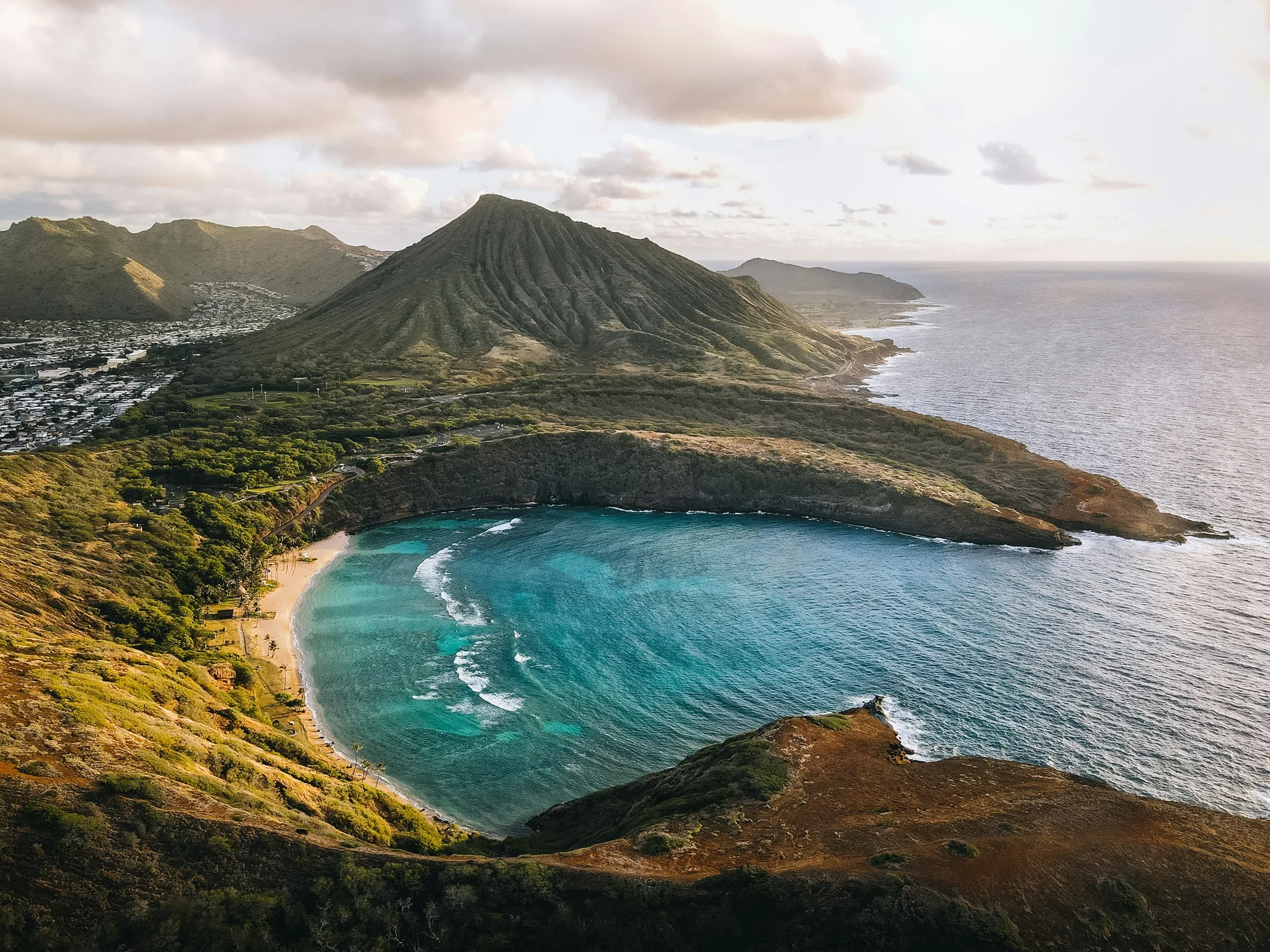
The paved trail to the lighthouse viewpoint climbs above the island’s southeastern coast, with wide views over deep blue water, offshore islets, and the windward curve of Oʻahu. It is popular, yes. You will not have it to yourself. But the elevation makes it excellent for scanning the ocean without needing to be on a boat.
In winter, this is one of Oʻahu’s classic places to look for humpback whales. Some days are quiet. Other days you may catch a spout, a tail, or a distant breach that makes the whole lookout pause. The point and nearby offshore islets are also important for seabirds, and you may see birds gliding along the cliffs or crossing the channel winds.
The rhythm here is simple: walk early if you want cooler temperatures and fewer people, then linger at the viewpoints. Wildlife watching is not improved by rushing to the top, taking a photo, and heading down. Give the ocean ten minutes. Then give it ten more.
For most visitors, the trail and overlooks are the point. You do not need to scramble down toward birds, tidepools, or surf to make the visit worthwhile.
Hanauma Bay: reef life in a managed setting
If your idea of wildlife includes reef fish, Hanauma Bay is one of the clearest examples on Oʻahu of a place designed around limits.
The bay is famous, and that fame comes with structure: managed entry, education, closures, and rules that can change over time. Some travelers find that inconvenient. In practice, it is one reason the experience can still be meaningful. This is not a free-for-all beach stop; it is a marine life conservation area where the main attraction is the living reef.
Hanauma is best approached slowly. Float more than you kick. Give fish space. The more still you are, the more the reef reveals itself: parrotfish grazing, butterflyfish slipping through coral heads, wrasse flickering in and out of view.
For first-time snorkelers, Hanauma can be a good introduction because the setting is organized and familiar to visitors. But it is still the ocean, not an aquarium. Conditions matter, and the reef is not there to be handled, touched, or rearranged. Check entry requirements before planning your day, and treat the orientation as part of the visit rather than a delay before the “real” experience.
Kawainui and Hamākua marshes: quiet birding on the windward side
Oʻahu’s wetlands do not always make glossy vacation lists, but they are essential to the island’s native bird life.
On the windward side, Kawainui Marsh and nearby Hamākua Marsh are places to look for endangered Hawaiian waterbirds from appropriate public viewpoints and edges. You are not going for a dramatic hike or a postcard beach. You are going to slow down and notice movement in the reeds: aeʻo, the Hawaiian stilt; ʻalae keʻokeʻo, the Hawaiian coot; and other wetland birds that depend on these low, watery habitats.
This kind of wildlife viewing asks for a different eye. At first, a marsh can look still. Then a bird steps out of the vegetation. A stilt lifts on thin pink legs. A coot crosses open water. The whole place begins to sharpen.
Bring binoculars and keep expectations gentle. Access around wetlands can be limited, and not every edge is meant for wandering. These are good stops for travelers staying in or passing through Kailua who want to see a quieter side of Oʻahu’s natural life.
North Shore beaches: honu, monk seals, and the problem with fame
The North Shore is one of the places visitors most associate with honu, the Hawaiian green sea turtle. It is also where wildlife viewing can become crowded, awkward, and too close.
Laniākea Beach is the best-known turtle-viewing spot, and that recognition has brought traffic, parking pressure, and heavy visitor attention. Turtles do still use the area, and volunteers or signs may be present when animals are resting on shore. If you go, keep expectations realistic: you may see turtles, you may see more people than turtles, and the best view may be from behind a perimeter.
It is better to think of honu viewing on Oʻahu as a possibility rather than a scheduled attraction. Turtles appear at many coastal areas around the island, especially near rocky reefs and algae-rich shoreline. Sometimes you see one from shore while eating lunch. Sometimes one surfaces while you are snorkeling. Sometimes the right move is simply to admire it for a moment and keep swimming away.
The same is true, even more so, for Hawaiian monk seals. They are rare, protected, and unpredictable. A seal may haul out on a busy beach or an isolated one. If you are lucky enough to see one resting, the best experience is usually quiet and brief: stay well back, use your zoom, and allow the animal to sleep.
Oʻahu’s beaches are social places. People gather, picnic, swim, fish, surf, and raise children there. Good wildlife viewing here is not about turning the beach into a museum. It is about making room when an animal needs the sand too.
Offshore islets and seabird sanctuaries
Oʻahu’s small offshore islets are more than scenic backdrops. Many are important for seabirds, and some have restrictions intended to protect nesting habitat.
From places like Lanikai, Kailua, Makapuʻu, and the southeastern coast, you may see seabirds moving between land, sea, and offshore nesting areas. The view from shore can be excellent with binoculars, especially in the morning or late afternoon light. Kayakers and paddlers should remember that an islet that looks inviting may also be sensitive habitat with rules about landing or access.
For most visitors, the right choice is easy: enjoy the islets as part of the seascape, watch birds from the beach or water at a respectful distance, and do not treat nesting areas as photo props.
Whale season from shore
Oʻahu is not as synonymous with whale watching as Maui, but humpback whales do pass through its waters in winter, and shore-based watching can be surprisingly satisfying.
Makapuʻu is a favorite because of its height and open ocean view. The southeast coast, parts of the North Shore, and west-facing lookouts can also offer chances when the season and sea conditions line up. Look first for a spout — a small white puff that hangs above the water — then the curve of a back, a tail, or a splash that seems too large to be wind chop.
A boat tour can be worthwhile if you choose an operator that gives whales space and does not promise theatrical closeness. But you do not need a boat to feel the thrill of seeing a whale. Sometimes the most memorable sighting is a distant breach from a windy lookout, surrounded by strangers who all saw it at the same time.
A simple way to plan your wildlife day
The best Oʻahu wildlife plan is not to chase every species. Pick one habitat and give it enough time.
If you want seabirds and a wilder walk, choose Kaʻena Point. If you want whales in season with an easy paved trail, choose Makapuʻu. If you want reef fish, plan carefully for Hanauma Bay. If you want native waterbirds, spend a quiet hour around windward wetlands. If you hope for turtles or monk seals, build beach time into your day without making an animal sighting the condition for success.
A few habits make nearly every encounter better: carry binoculars, keep food packed away, do not feed animals, respect signs and roped areas, and let sleeping or nesting wildlife remain boring. “Boring” is often what healthy wildlife needs from us.
Oʻahu can be loud, busy, and full of motion. But if you watch carefully, another island appears inside that island: albatross riding the wind at Kaʻena, stilts picking through marsh water, reef fish working the coral, a whale spout dissolving off Makapuʻu, a turtle lifting its head in the shorebreak. None of these moments need to be manufactured. They only need enough space to happen.

Further Reading
A few relevant next steps from Alakai Aloha.
 BlogNative, Endemic, and Invasive on Oʻahu
Learn how to read Oʻahu’s landscapes through native, endemic, introduced, and invasive species—and how small visitor choices can help protect them.
Editor's pick GuideBest Beaches: Swim, Snorkel, Sunset & Family
A guide to best beaches Oʻahu.
Editor's pick ActivityLaniakea Beach
Laniakea Beach on Oahu's North Shore is famed for consistent sightings of Hawaiian Green Sea Turtles (honu) basking on its sands, offering a unique wildlife viewing experience for respectful visitors.
Editor's pick BlogQuieter Oʻahu Hikes and Beaches to Try
Find room to breathe on Oʻahu with public hikes, less-crowded shorelines, smarter timing, and practical tips for exploring respectfully.
Editor's pick