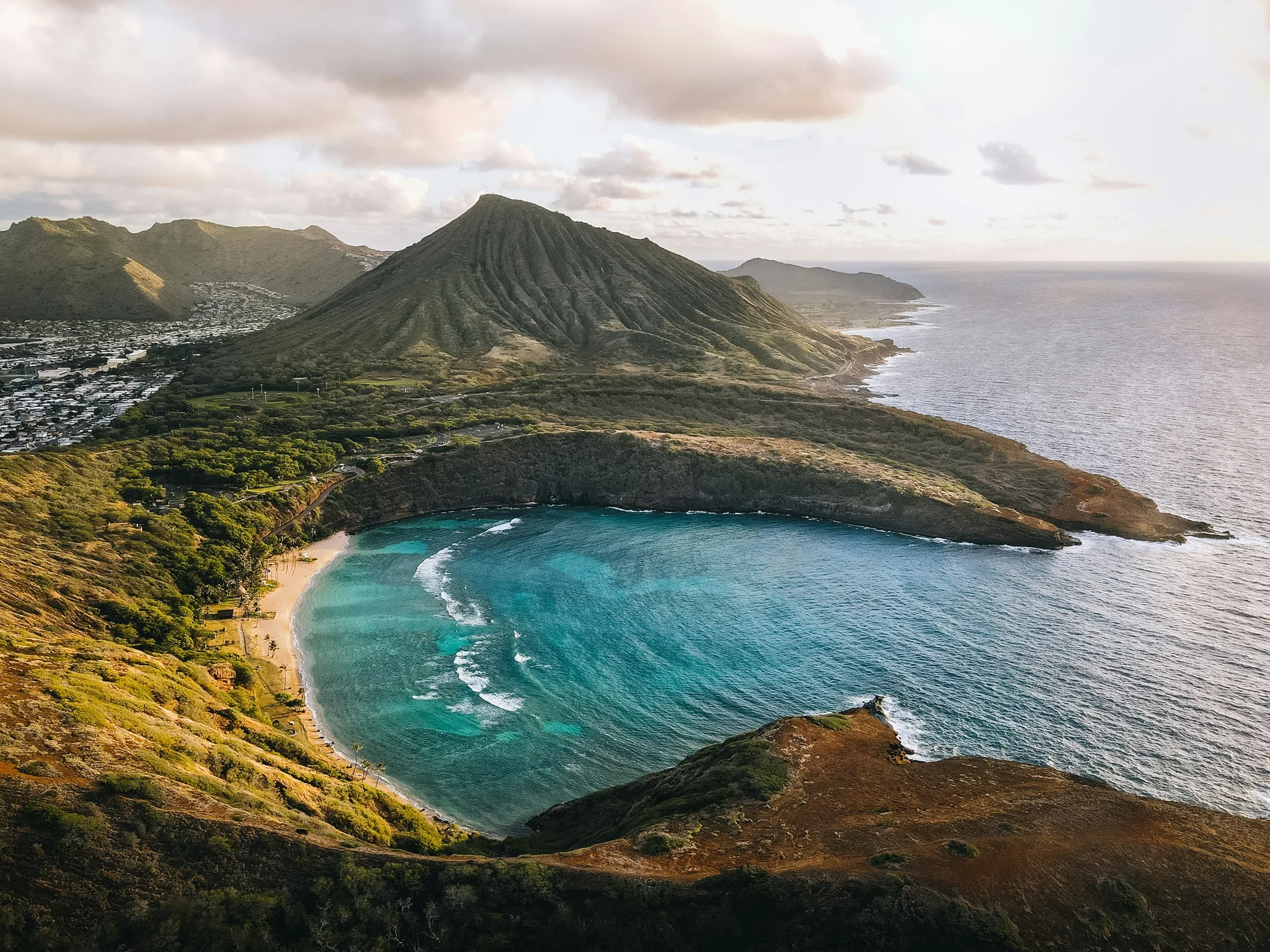


Diamond Head is one of the rare Oʻahu outings that is both easy to reach and genuinely satisfying. You can leave Waikīkī after breakfast, climb through the inside of an old volcanic crater, stand above Honolulu with the ocean laid out in clean blue bands, and still have most of the day ahead of you.
The catch is that it is no longer the kind of place where you simply roll up whenever the mood strikes. For most visitors, Diamond Head now requires advance planning: an entry reservation, and a separate parking choice if you plan to drive into the crater. None of this is difficult, but it does change the rhythm of the visit. The best experience comes from picking your time carefully, understanding what the trail is actually like, and not squeezing it into too-tight a window.
First, know what you are reserving
Diamond Head State Monument is the state park site at Lēʻahi, the crater on the east edge of Waikīkī. Non-Hawaiʻi residents generally need an advance reservation to enter. If you are driving, choose the option that includes parking. If you are being dropped off, walking in, taking transit, or arriving with a tour, you are usually looking for entry only.
Hawaiʻi residents are treated differently from out-of-state visitors and may not need the same reservation or fee arrangement when showing valid local identification. If that applies to your group, check the current state park guidance before booking; if you have a mixed group of residents and visitors, do not assume one person’s status covers everyone.
The practical point is simple: parking inside the crater is limited. If you plan to drive into Diamond Head, the parking reservation is not a nice extra. It is the piece that makes the morning work.
Reservations are typically made for a specific arrival window. Treat that window seriously. Do not plan to arrive far early and wait your way in, and do not assume you can show up late and be waved through. Oʻahu traffic can be soft one minute and sticky the next, especially around Waikīkī, Kapahulu, and the roads feeding Diamond Head, so give yourself a little padding.
The best time to hike Diamond Head
For most travelers, the best Diamond Head time slot is early morning: not because it is empty, but because it is cooler. The crater and upper trail hold a lot of sun. Even though the hike is short, the heat can make it feel sharper than the mileage suggests.
The first morning slots are popular and tend to go quickly. If you care about cooler air and softer light, reserve early rather than waiting until the day before. That said, do not get too romantic about “sunrise at Diamond Head.” Depending on the season and access hours, the park experience may not line up with a dramatic summit sunrise. Think of it as a morning hike with excellent light, not a guaranteed sunrise production.
Late morning is still workable, especially if you are used to walking. It is also when some families find the timing easier: breakfast first, no alarm-clock vacation mood, then the hike. The tradeoff is more sun and a busier feel on the trail.
Midday is the slot to choose only if it fits your day and you are comfortable with heat. There is not much shade on the exposed sections. Bring water, wear shoes with decent grip, and expect the climb to feel more like a hot stair workout than a scenic stroll.
Late afternoon can be lovely, with lower light on Waikīkī and the south shore, but it leaves less room for delays. If you choose a later time, arrive organized. This is not the moment to be circling for parking, repacking bags, or discovering that someone forgot the reservation.
How hard is the hike, really?
Diamond Head is short, but it is not flat. The trail is under two miles round trip, with a steady climb from the crater floor to the summit area. Many visitors finish comfortably, including families and casual walkers, but the route has enough stairs, uneven footing, and exposed sun to surprise people who expected a paved lookout path.
The first part is the easiest: a gradual paved section that begins near the crater parking and trailhead area. Soon the path becomes more uneven, with switchbacks up the inner slope. Near the top, you will pass through a tunnel and climb stair sections, with some narrower areas where the line slows down.
There are a couple of route choices near the upper portion, and the exact flow can change depending on crowding. In general, one way feels more direct and stair-heavy, while another is a little more open and gradual. If you are not in a rush, take the option that lets your group move comfortably rather than trying to “win” the trail.
The summit area is compact. On a busy morning, expect a small shuffle of people taking photos, stepping aside, and making room. The view is the reason everyone came: Waikīkī below you, the hotels lined along the shore, Kapiʻolani Park’s green stretch, the ocean shifting color over the reef, and Honolulu spreading inland toward the mountains.
How much time to allow
A clean Diamond Head visit usually takes about 90 minutes to two hours from arrival to departure. Strong hikers who keep moving can do it faster, but most visitors are happier when they do not have to. You will want time for the entry process, restrooms, the climb, summit photos, the walk down, and a few pauses for water.
If you have plans immediately afterward — brunch, a checkout time, a surf lesson — build in more space than the mileage implies. Diamond Head is close to Waikīkī, but close does not always mean instant. The slow parts are often not the trail itself; they are getting everyone out the door, navigating traffic, finding the entrance, and moving through the summit bottleneck.
A good vacation rhythm is to make Diamond Head the first real activity of the day, then let the rest of the morning be easy. Coffee or breakfast afterward tastes better when you are not watching the clock.
Driving, drop-off, or tour?
Driving is convenient if you have a parking reservation. You enter through the crater access road, check in, park inside, and begin the hike near the crater floor. It keeps the logistics tidy, especially for families or anyone carrying extra water, hats, or a change of clothes.
The downside is that parking reservations can be the first thing to disappear during popular times. If the time you want has entry available but no parking, consider whether you actually need a car for this outing. From Waikīkī, many travelers use a rideshare, taxi, tour transfer, bus, or a longer walk depending on where they are staying and how they like to move.
If you are being dropped off, make sure your reservation matches that plan. Do not book entry only and then expect to park. If you are joining a guided tour, ask the operator exactly what is included. Some tours handle the entry logistics; others may expect you to have your own reservation. It is better to clarify before you are standing at the gate.
What to bring
You do not need hiking gear for Diamond Head, but you do need to dress for a real climb in the sun.
Wear comfortable walking shoes or sturdy sandals with traction. Bring water for each person. A hat and sunglasses help more than you think, especially on the descent when the sun is in your face. If you burn easily, handle sunscreen before you start rather than trying to apply it halfway up a windy stair section.
Travel light. A small daypack is fine. A large beach bag, loose towels, or anything you have to hand-carry will feel annoying by the tunnel and stairs. If your plan is to go straight to the beach afterward, leave the beach load in the car or at your hotel and keep the hike simple.
There are restrooms near the trailhead area, so use them before starting. Once you are on the trail, you are on the trail.
Who will enjoy it most
Diamond Head is a good fit if you want a classic Oʻahu view without committing half a day to a remote trail. It is especially good for first-time visitors staying in Waikīkī, travelers who like a little activity before the beach, and families with kids who can handle stairs and a steady uphill walk.
It is not the best choice if your main goal is solitude. Diamond Head is popular, visible, and highly managed. You will share the path with visitors from all over the world, and that is part of the experience. If crowds irritate you even when the view is good, go early, choose a weekday if your schedule allows, and keep your expectations realistic.
It may also be the wrong hike for anyone who struggles with stairs, heat, or enclosed tunnel sections. There is no shame in enjoying Diamond Head from below; the crater is part of the Waikīkī landscape even when you do not climb it.
A simple plan for the day
Book your reservation once you know your Oʻahu schedule, especially if you want an early parking slot. Choose a morning that does not already have too many moving parts. The night before, confirm the reservation details, set out shoes and water, and decide how you are getting there.
On the day itself, eat something light, leave with a little buffer, and do not overcomplicate the outing. Diamond Head rewards a simple plan. Arrive, climb, look around, come down, and let the rest of Honolulu open up from there.
That is the real appeal of Lēʻahi for travelers: not that it is wild or undiscovered, but that it gives you your bearings. From the summit, Oʻahu feels legible for a moment — the curve of Waikīkī, the reef, the city, the mountains, the roads you have been driving without quite understanding. Then you descend back into the crater, dusty and warm, ready for the rest of the day.

Further Reading
A few relevant next steps from Alakai Aloha.
 BlogNative, Endemic, and Invasive on Oʻahu
Learn how to read Oʻahu’s landscapes through native, endemic, introduced, and invasive species—and how small visitor choices can help protect them.
Editor's pick GuideBest Hikes: Easy, Scenic & Challenging Trails
A guide to best hikes Oʻahu.
Editor's pick ActivityDiamond Head State Monument
Hike the iconic Diamond Head State Monument for a moderate challenge, stunning panoramic views of Waikiki and the coast, and a glimpse into Oahu's volcanic history.
Editor's pick BlogHike Oʻahu Trails With Care and Respect
A practical guide to hiking pono on Oʻahu, from choosing open trails to respecting neighborhoods, cultural places, weather, and fragile terrain.
Editor's pick