

If you spend a little time on Oʻahu’s coast with your eyes adjusted to the sky, the ʻiwa begins to stand out from the general movement of gulls, terns, and passing clouds. It is not a bird that asks for close attention by perching nearby. It announces itself by shape: a long black cutout, angular and controlled, riding the wind with almost insulting ease.
For travelers, that is the right way to understand the great frigatebird in Hawaiʻi. You are usually not “visiting” ʻiwa at a colony on Oʻahu. You are catching them in their element — above cliffs, offshore islets, rough water, and trade-wind lift — as they cross the island’s edge on their own schedule.
How to recognize an ʻiwa
The ʻiwa, or great frigatebird, is one of the easiest Hawaiian seabirds to identify once you know its outline.
Look for a very large, dark bird with:
Long, narrow wings held in a sharp, angled shape A deeply forked tail that opens and closes as it steers Minimal flapping, even in strong wind A light, buoyant flight style, often high above the water or cliffs
Its wingspan can be around seven feet, but the bird itself is surprisingly light. That combination — huge wing area, low body weight — is why ʻiwa seem to hang in the air rather than fight it. On a good windy day along Oʻahu’s sea cliffs, you may watch one bank, stall, rise, and slide sideways without a single obvious wingbeat.
Plumage varies by sex and age. Adult males are mostly black and, in breeding display, can inflate a red throat pouch. Females are larger and have a white breast and throat. Juveniles show more white on the head and underparts.
From most public viewpoints on Oʻahu, you are likely to identify ʻiwa by silhouette more than plumage. Binoculars help, but the tail and wings do most of the work.
Why ʻiwa are called “thieves”
The Hawaiian name ʻiwa is often associated with thievery, and the bird earned the reputation honestly.
Great frigatebirds snatch prey such as squid and flying fish near the ocean surface, but they are also famous for kleptoparasitism — harassing other seabirds in flight until the bird drops or regurgitates its catch. The ʻiwa then seizes the meal in midair.
It sounds ruthless, but in the sky it looks like speed, timing, and nerve. An ʻiwa can twist behind a booby or tern, pressure it from above, and make the exchange look choreographed. This behavior is one reason frigatebirds are sometimes called “man-o’-war birds.”
They have another odd limitation: their feathers are not waterproof in the way many seabirds’ feathers are. An ʻiwa cannot simply sit on the ocean like a shearwater or booby. It lives by lift, precision, and staying airborne.
That is part of what makes seeing one from shore so satisfying. You are watching a bird built for the space between ocean and sky, not the land.
The cultural presence of ʻiwa in Hawaiʻi
The ʻiwa is not just a field-guide species in Hawaiʻi. It appears in Hawaiian language, proverb, and chiefly imagery as a bird of grace, skill, and command of the air.
One well-known ʻōlelo noʻeau, “Kīkaha ka ʻiwa i ka pali,” evokes the image of an ʻiwa soaring along the cliff. The saying is often used in praise of graceful, attractive movement — someone passing with the poise of the bird itself.
The ʻiwa also appears in chiefly associations. Kamehameha I is connected with the name Kaʻiwakīloumoku, often understood as “the ʻiwa that hooks the islands together,” a powerful image for a ruler who united the Hawaiian Islands. The metaphor works because the bird is not earthbound. It ranges, searches, pulls lines of sight together across ocean and land.
When an ʻiwa rides the wind above a pali, you are seeing a living creature that has long shaped how people in Hawaiʻi describe elegance, strategy, and reach.
Where to look for ʻiwa on Oʻahu
Oʻahu is busy at ground level, but the island still offers excellent sky-watching when the wind is right. Choose places where seabirds can use coastal lift: cliffs, headlands, offshore-islet views, and open ocean edges.
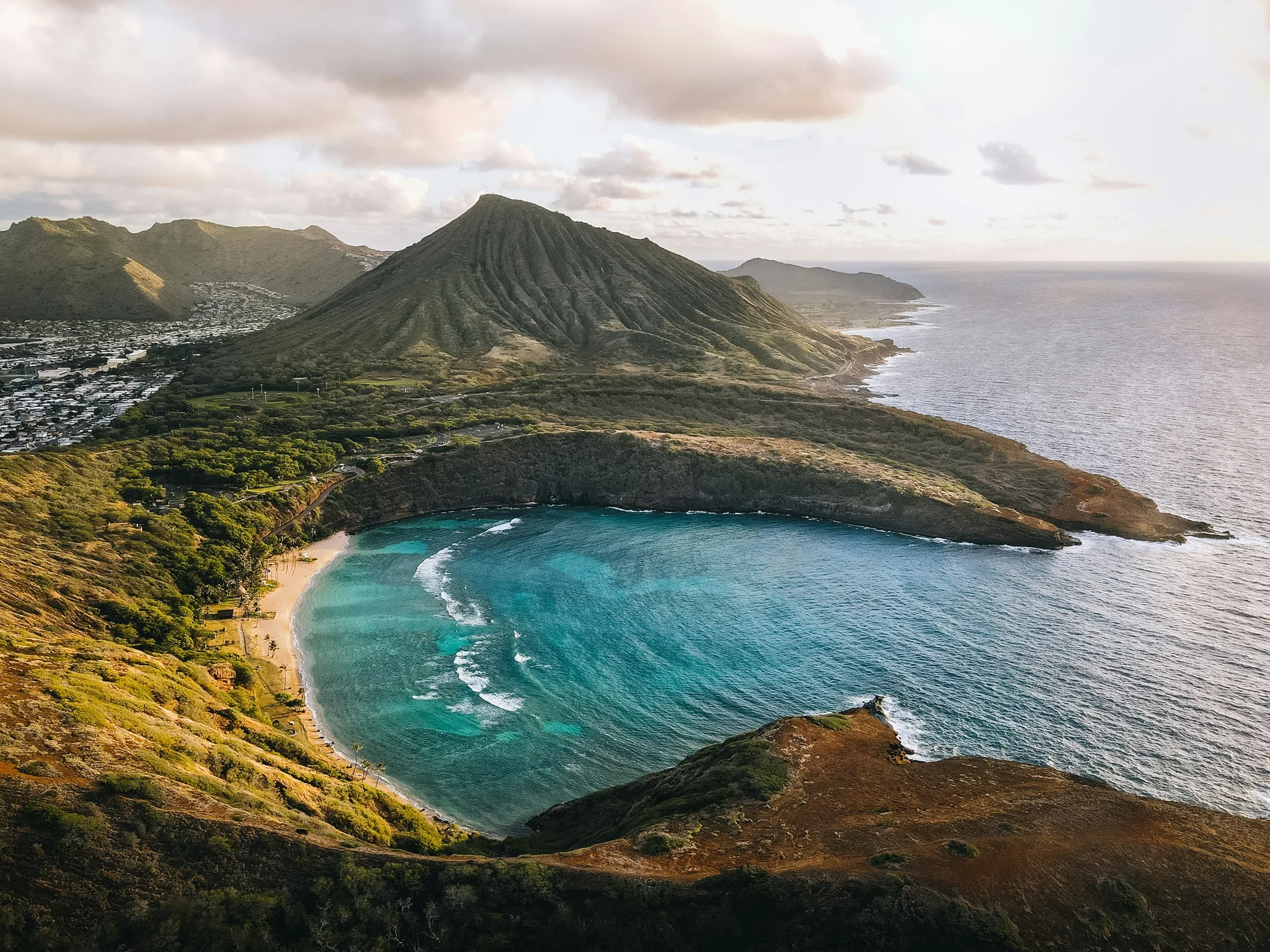
Makapuʻu and the Kaiwi Coast
The southeastern corner of Oʻahu is one of the island’s best practical areas for watching ʻiwa from land. Around Makapuʻu and the Kaiwi coastline, trade winds meet steep slopes and open water. Birds can rise on the updrafts and patrol the coast without working hard.
The Makapuʻu Lighthouse Trail gives you height and open sightlines. Scan above the ridge, out over the channel, and along the cliff lines rather than only straight down at the water. ʻIwa may appear high and distant at first, then come closer as they work the lift.
Nearby coastal pullouts along this stretch can also be productive when the wind is up. The viewing is casual: park where it is legal, step back from the road, and give yourself a few quiet minutes to read the sky.
Hālona, Lānaʻi Lookout, and the southeast shore
The coastline between Hawaiʻi Kai and Sandy Beach has several places where open ocean, lava ledges, and wind combine. ʻIwa are not guaranteed, but this is the kind of exposed coast where they make sense.
At places like Hālona and Lānaʻi Lookout, most visitors naturally look toward the waterline. For seabirds, look higher. ʻIwa may be well above the surf zone, moving along the face of the wind. A bird that seems motionless against the clouds may suddenly reveal the forked tail and long wings when it banks.
This is also a good reminder that ʻiwa watching does not need to become a separate expedition. If you are already driving the southeast shore, bring your attention upward.
Windward Oʻahu and offshore-islet country
Oʻahu’s windward side faces important offshore seabird habitat, including small islets that are not general visitor landing areas. From shore, especially on clear windy days, you may see ʻiwa moving along the coast or crossing between feeding areas.
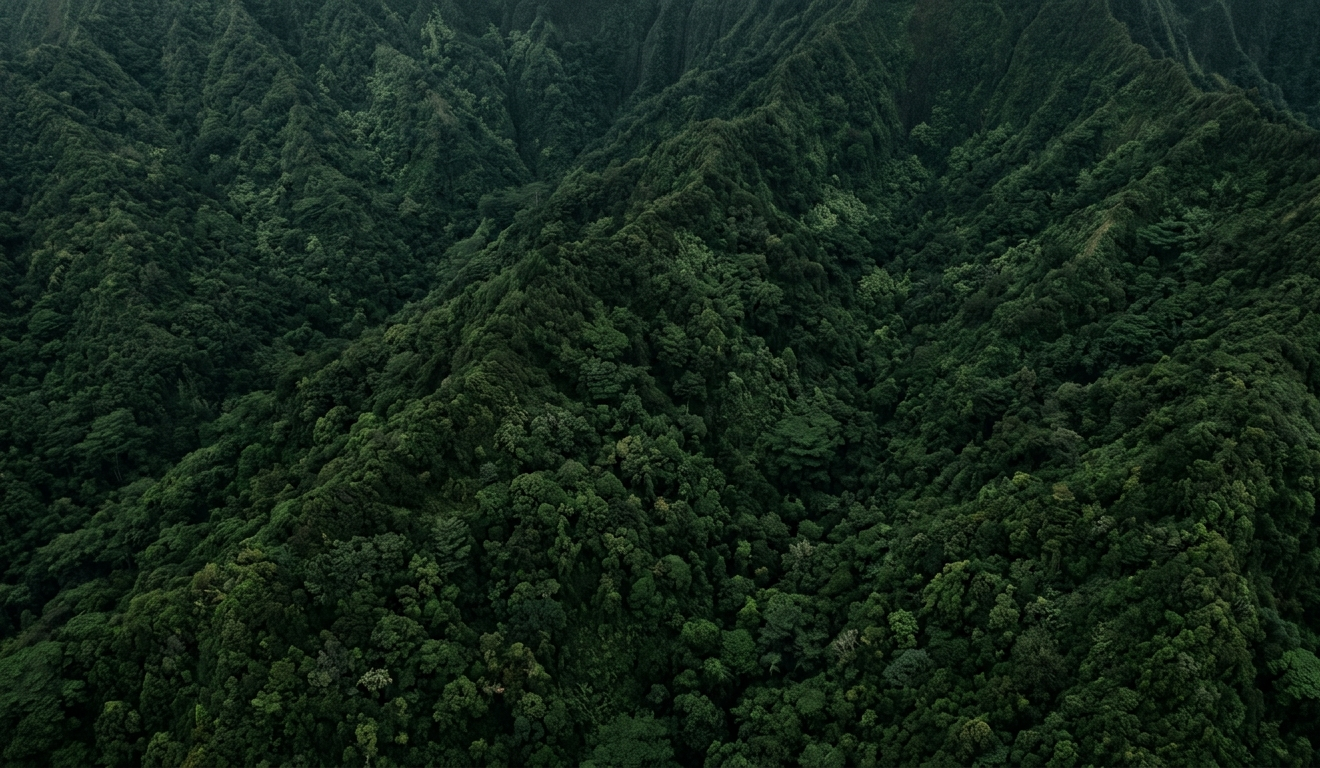
Kailua, Lanikai, Waimānalo, and Kāneʻohe-side viewpoints can all put you in the right general landscape: open windward water, islets offshore, and trades pushing clouds across the Koʻolau. The birds may be distant, so this is where binoculars make the difference between “large dark bird” and a confident ʻiwa sighting.
Kaʻena Point
At the western tip of Oʻahu, Kaʻena Point feels far from Honolulu’s pace. It is better known to many birders for other seabirds, but ʻiwa can pass through or patrol offshore when conditions line up.
This is not the easiest place to see them if your only goal is a quick ʻiwa sighting. It requires time, sun exposure, and a willingness to walk. But if Kaʻena Point is already part of your trip, it is worth scanning the ocean and sky. The point has the right feeling for seabirds: open, wind-shaped, and edged by deep water.
When conditions are best
ʻIwa sightings are less about the clock and more about wind.
Trade-wind days are your friend. When the breeze is steady, frigatebirds can use the lift along cliffs and slopes, especially on Oʻahu’s eastern and southeastern coasts. Afternoons can be good because winds often build through the day, but do not treat that as a rule. If the coast is windy and the sky is clear enough to read silhouettes, look.
A few practical tips make the difference:
Scan slowly, not constantly. Let your eyes settle on one section of sky. Watch the ridge line and the air above cliffs, not only the water. Use the forked tail for confirmation. Compare flight style: ʻiwa glide and steer more than they flap. Give a spot at least ten minutes before deciding nothing is there.
The first ʻiwa you spot may unlock the rest. Once your brain learns the outline, you begin seeing how different it is from everything around it.
The reward of looking up
Oʻahu rewards travelers who pay attention in layers. The beach may be busy, the road may be moving, the lookout may be crowded for a photograph — and above all of it, an ʻiwa may be carving the wind with complete indifference.
That is the gift of this bird. It changes the scale of the moment. You stop thinking only about the next stop on your route and start noticing the air itself: how it lifts off a cliff, how clouds move over the Koʻolau, how the ocean surface flashes below.
An ʻiwa sighting on Oʻahu may last ten seconds or ten minutes. Either is enough. Once you know the shape, the island’s sky feels more alive.

Further Reading
A few relevant next steps from Alakai Aloha.
 BlogHow to See Honu Responsibly on Oʻahu
Learn where honu are most often seen on Oʻahu, what they mean in Hawaiʻi, and how to enjoy a turtle encounter while giving wildlife the space it needs.
Editor's pick GuideBest Beaches: Swim, Snorkel, Sunset & Family
A guide to best beaches Oʻahu.
Editor's pick ActivityLānaʻi Lookout
Discover Lānaʻi Lookout on Oʻahu's southeastern coast, offering dramatic panoramic ocean views, volcanic rock formations, seasonal whale watching, and stunning photography opportunities, especially at sunrise or sunset.
Editor's pick ActivitySandy Beach
Sandy Beach on Oʻahu offers powerful shore break for expert bodyboarders and bodysurfers, stunning scenic views, and picnic spots, though water entry is highly dangerous.
Editor's pick