

On Oʻahu, honu have a way of stopping the day without making a sound.
You might be standing at a North Shore beach with shave ice melting in the car, or floating above a reef in clear morning water, when a broad shell lifts out of the blue and a turtle rises for air. The moment feels old, calm, and completely unhurried. That is part of why travelers seek them out — and why they deserve space.
This guide is for visitors who hope to see sea turtles on Oʻahu and want to understand what they’re seeing: which turtles live here, why honu matter in Hawaiʻi, what the law says, and how to watch them without turning a wild encounter into a spectacle.
The sea turtles you’re most likely to see on Oʻahu
Several sea turtle species occur in Hawaiian waters, but most visitor encounters on Oʻahu involve the Hawaiian green sea turtle, commonly called honu.
Hawaiian green sea turtle, or honu
The honu is the turtle most people picture when they think of Hawaiʻi: a large, smooth-shelled sea turtle with a gentle-looking face and steady, winglike strokes through the water. Despite the name, “green” does not describe the shell color. It refers to the greenish fat associated with their diet, which is largely made up of marine algae and seagrasses.
Around Oʻahu, honu are often seen near reef areas where they feed, rest, and move along the shoreline. They may also haul out on the sand to bask. That behavior surprises many first-time visitors: a turtle on the beach is not necessarily stranded or in distress. Often, it is simply resting.
Hawksbill sea turtle, or honuʻea
The hawksbill sea turtle, known in Hawaiian as honuʻea, is much rarer. Hawksbills are generally smaller than green sea turtles and have a sharper, beaklike mouth adapted for feeding around coral reefs. They are critically endangered globally, and sightings on Oʻahu are uncommon compared with honu.
If you happen to see one, treat it as a quiet privilege. Most visitors will not knowingly encounter a honuʻea, and that is normal.
Why honu matter in Hawaiʻi
For many Native Hawaiian families, honu can hold deep cultural meaning. In some traditions, they are understood as ʻaumākua — ancestral family guardians — though it is important not to flatten that into a single island-wide belief or visitor-friendly symbol. Hawaiian relationships with animals, places, names, and stories are specific, genealogical, and layered.
For travelers, the most honest starting point is simple: honu are not just “cute turtles.” They are part of Hawaiʻi’s living seascape, part of reef ecology, and part of cultural memory for many people whose ties to these islands are much older than tourism.
Ecologically, green sea turtles help shape reef environments through grazing. By feeding on algae, they participate in the balance of reef systems. Hawksbills, where present, have their own reef role as sponge feeders. These are not decorative animals added to the ocean for our enjoyment; they belong to the functioning life of the place.
That understanding changes the viewing experience. You are not visiting an attraction. You are briefly crossing paths with a resident.
What the law says, in plain language
Sea turtles in Hawaiʻi are protected under federal and state law. The practical takeaway is straightforward:
Do not touch, chase, crowd, feed, ride, pick up, block, or otherwise disturb sea turtles.
Federal agencies commonly advise giving sea turtles at least 10 feet of space on land and in the water. More space is better, especially when a turtle is resting on the sand or when a crowd has formed.
If your behavior makes the turtle change what it was doing — swim away, lift its head repeatedly, stop resting, alter course, or struggle to reach the ocean — you are too close or too involved.
Use your zoom. Let the turtle keep its day.
Where visitors commonly encounter honu on Oʻahu
Oʻahu has a lot of coastline, and honu can appear in many reefy areas. Sightings are never guaranteed, and the best experiences are often the least forced: a turtle passing below you while snorkeling, a shell rising offshore while you sit on the sand, a calm glimpse from a respectful distance.
North Shore
The North Shore is strongly associated with turtle sightings, especially around the Haleʻiwa-to-Pūpūkea stretch. Laniākea Beach is the name many visitors hear first; it is often called “Turtle Beach” in travel chatter.
It can be memorable, but it is not a secret and not always the easiest stop. Parking, road crossings, surf, and crowds can make the experience feel less peaceful than people imagine. If you go, keep expectations modest: you may see turtles, you may see only people waiting to see turtles, and either way the beach is still a living shoreline, not a showtime venue.
In winter, North Shore surf can be powerful. Even if you are only standing on the sand, ocean conditions affect where turtles can rest and where people can safely linger.
Snorkeling areas
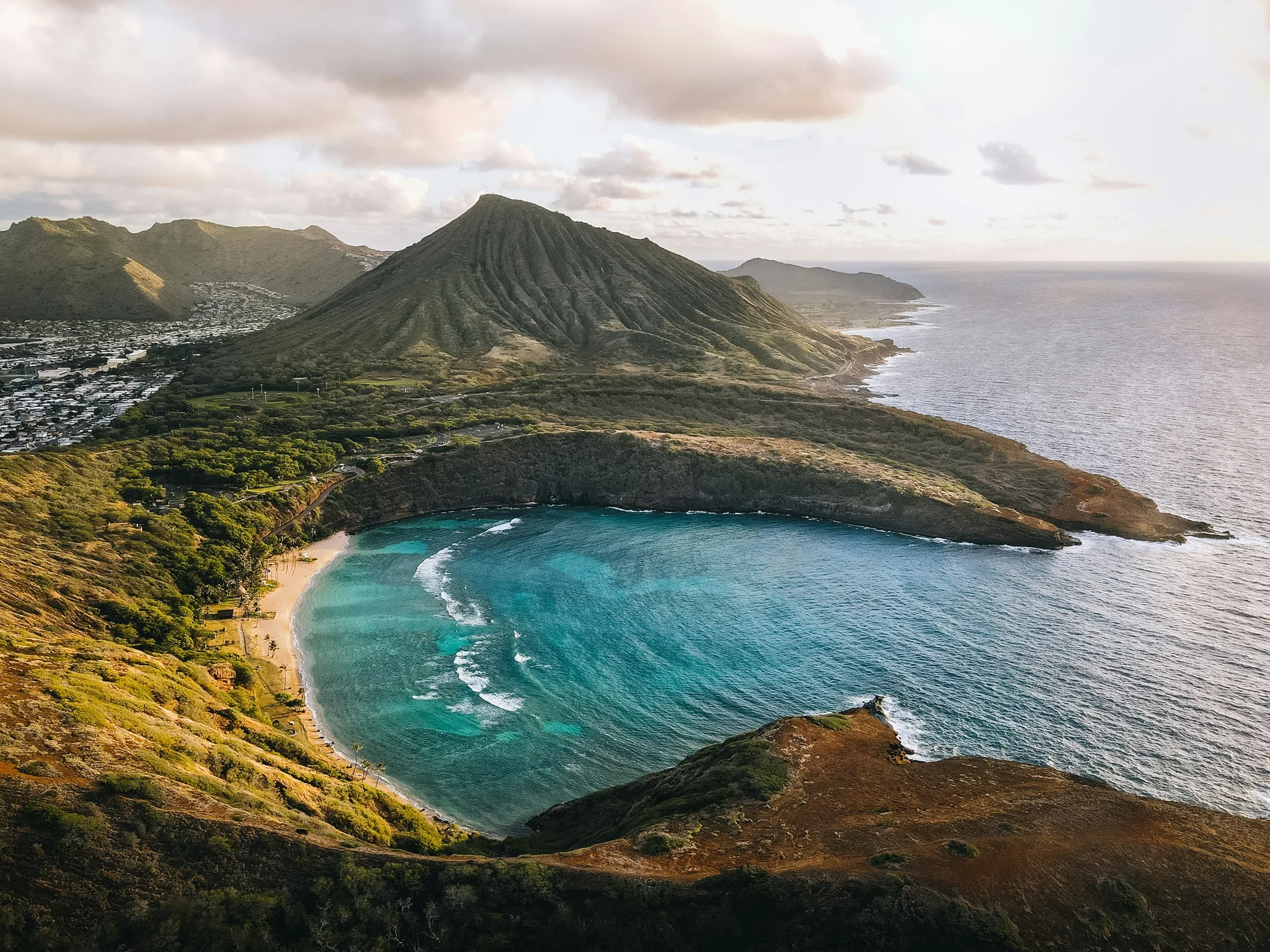
At reef snorkeling areas around Oʻahu, honu sometimes appear underwater. Hanauma Bay is one of the island’s best-known managed marine areas, and turtles are among the marine animals visitors hope to see there. Other reef zones around the island may also have turtle activity depending on conditions.
The best snorkeling mindset is to let the reef come to you. Float calmly. Watch your fins. Don’t chase a turtle for a photo. If one surfaces nearby, give it a clear path to breathe. If it swims away, let that be the end of the encounter.
A good turtle sighting underwater is usually brief. That is part of its beauty.
Leeward reefs and Waikīkī
Oʻahu’s leeward coast has reef and lava-rock shoreline where turtles are sometimes seen feeding or moving close to shore. These areas can feel less staged than the famous North Shore turtle stops, but entries can be rocky, currents can vary, and some places are better appreciated from shore unless you already understand the conditions.
Even in more developed areas, honu may appear offshore. Visitors occasionally see turtles while surfing, paddling, sailing, or swimming near Waikīkī and the south shore. These sightings feel especially surprising because the city is right there behind you: honu moving through their own world with hotels and high-rises in the background.
If you see a turtle basking on the beach
A basking honu can look almost impossibly still. Usually, it is simply resting.
Here is the easy version:
Stay at least 10 feet away. Do not stand between the turtle and the ocean. Keep children from running up to it. Take photos from a distance. Do not touch the shell, flippers, or head. If volunteers or posted signs are present, follow their guidance.
You may see a loose perimeter marked around a turtle at some beaches. Treat that not as a challenge to get “just inside for one quick picture,” but as a helpful reminder that the animal needs room.
If a turtle appears injured, entangled, or clearly distressed, do not try to handle it yourself. Report it to the appropriate local wildlife response authorities or alert lifeguards if they are nearby.
If you see a turtle while swimming or snorkeling
In the water, the main thing is not to turn the encounter into a pursuit.
Turtles need to surface to breathe. If one is rising, give it space above and around you. If one is feeding along the reef, watch without hovering over it. If a turtle approaches you, stay calm and still, then let it pass. Do not reach out, even if it comes close.
A common mistake is the slow-motion chase: a swimmer following behind a turtle, camera extended, always “just a little farther.” It may not feel aggressive, but to the turtle it is still pressure. Let the animal choose the distance.
The memory will be better that way. A relaxed turtle moving naturally through the water is far more beautiful than a stressed one escaping a crowd.
The best time to see honu on Oʻahu
There is no appointment time for sea turtles. They are seen year-round in Hawaiʻi, but your chances depend on ocean conditions, tides, surf, visibility, and simple luck.
For beach viewing, calm periods can make it easier to spot turtles near shore or resting on sand. For snorkeling, mornings often offer gentler conditions in many areas, though this varies by coast and season. North Shore winter surf can dramatically change what is reasonable or visible. Summer can bring calmer North Shore days, but crowds increase too.
Rather than building your whole day around a guaranteed turtle sighting, choose a beach or reef experience you would enjoy anyway. Then, if a honu appears, it becomes a gift instead of a missed expectation.
A better way to think about turtle viewing
Oʻahu makes wildlife feel surprisingly close. That closeness is part of the island’s magic, but it can also confuse people. When an animal is only a few yards away, the normal vacation instinct is to move closer, frame the shot, and make the moment yours.
Honu ask for the opposite. The more you hold back, the more you get to witness.
You notice the way a turtle lifts its head before taking a breath. The pattern of algae on its shell. The small fish moving around it. The long pause before it returns to the water. You begin to see the beach less as a backdrop and more as habitat.
That is the better souvenir: not proof that you got close, but the feeling that you understood the distance.

Further Reading
A few relevant next steps from Alakai Aloha.
 BlogHow to View Hawaiian Monk Seals on Oʻahu
Learn how to identify ʻīlioholoikauaua on Oʻahu, give resting monk seals the space they need, and know who to call if a seal looks injured or disturbed.
Editor's pick GuideBest Oʻahu Luaus & Cultural Experiences
A guide to best Oʻahu luaus.
Editor's pick ActivityLaniakea Beach
Laniakea Beach on Oahu's North Shore is famed for consistent sightings of Hawaiian Green Sea Turtles (honu) basking on its sands, offering a unique wildlife viewing experience for respectful visitors.
Editor's pick ActivityTurtle Beach
Discover Turtle Beach, also known as Kukae'ohiki, a scenic North Shore beach near Turtle Bay Resort offering rugged coastal beauty and the chance to spot Hawaiian green sea turtles amidst a picturesque backdrop.
Editor's pick