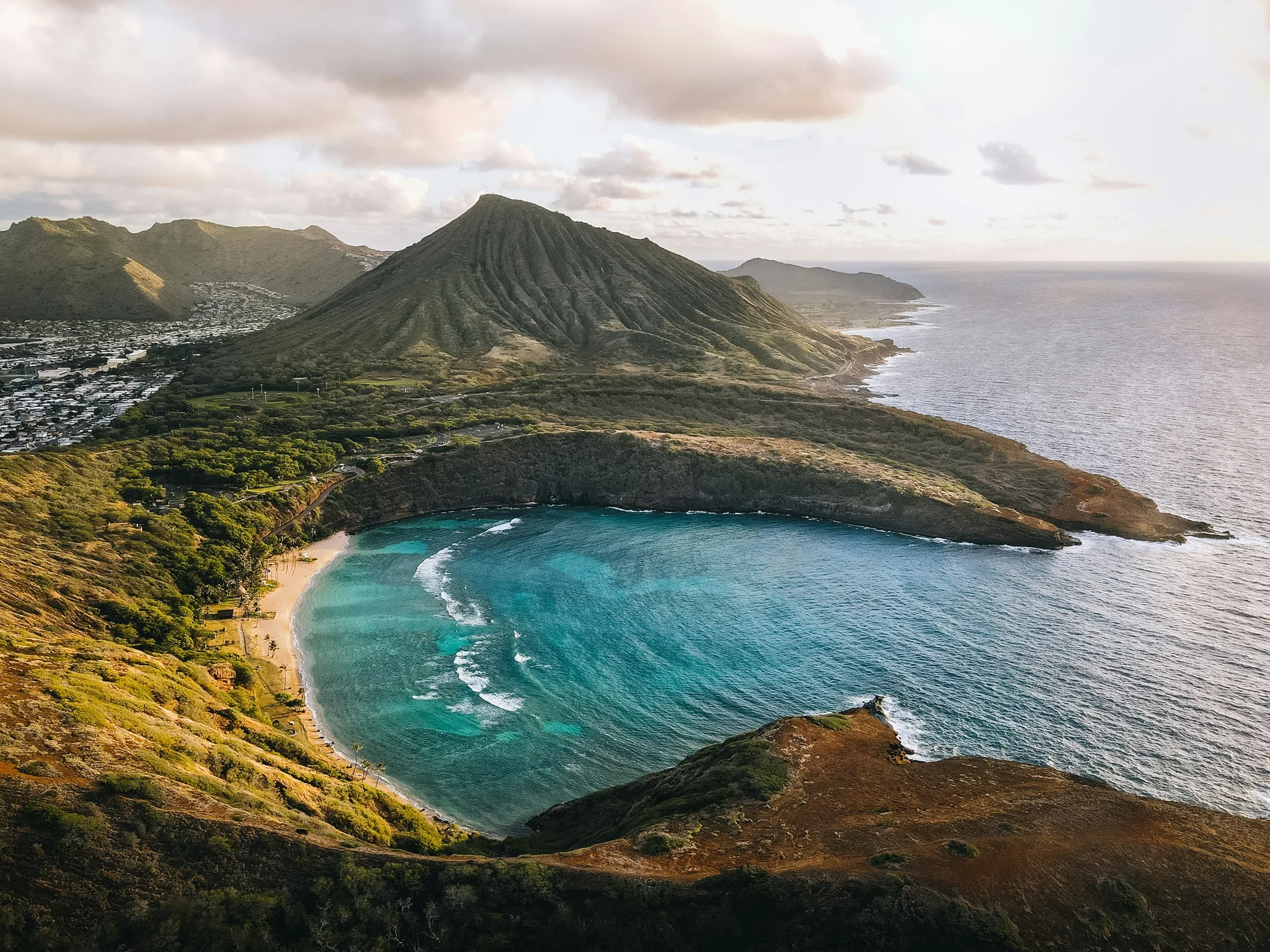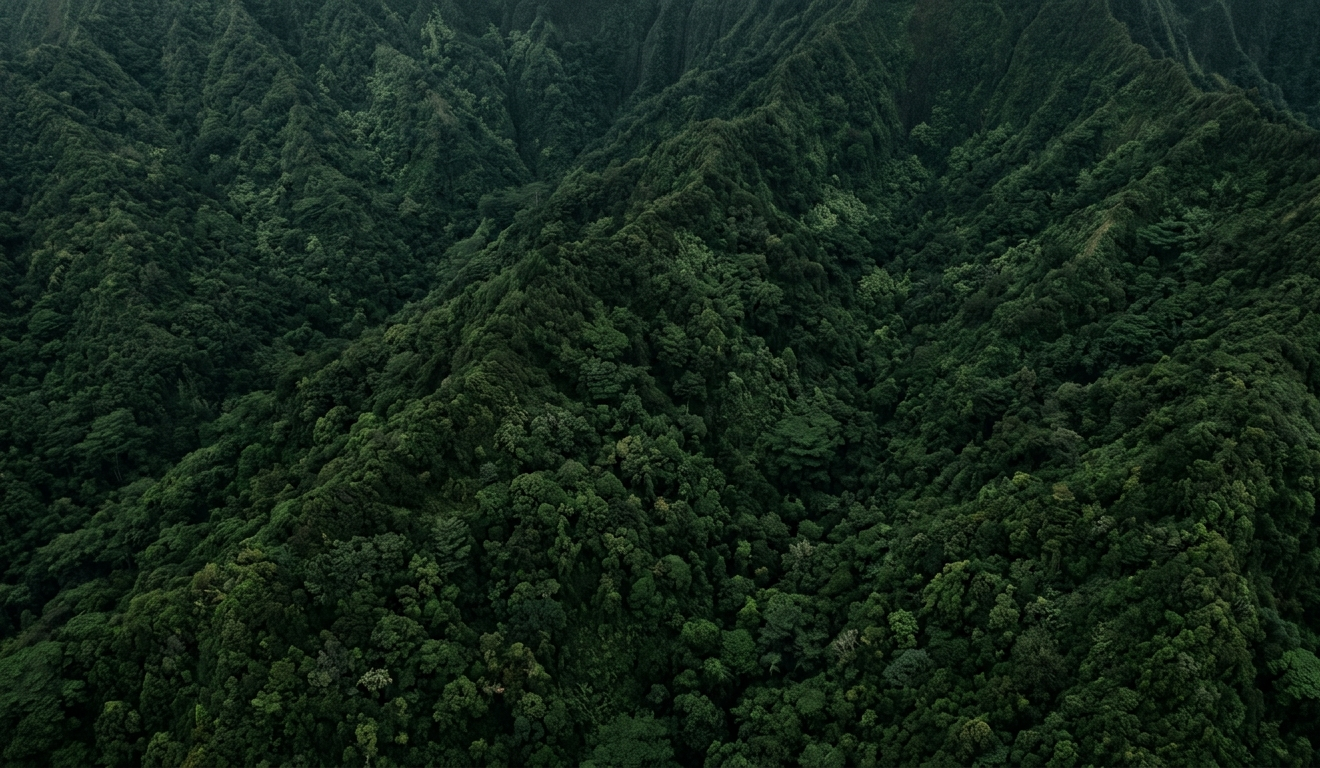


Oʻahu is often introduced through its busiest places: Waikīkī, Pearl Harbor, Diamond Head, the North Shore road. But the island has another map beneath the one on your phone — a map of names, winds, stones, sharks, chiefs, healers, ridgelines, and family memory.
That map is carried through moʻolelo: stories, histories, accounts, and teachings. Some are ancient. Some are tied to aliʻi, the chiefly families whose decisions shaped the island. Some explain why a shoreline, valley, or offshore islet carries a particular name. Others are remembered through hula, chant, Hawaiian-language newspapers, museum collections, family traditions, and the authority of people who have cared for these places for generations.
For visitors, the best way into Oʻahu’s moʻolelo is not to collect “legends” like souvenirs. It is to let the stories slow you down. A beach becomes more than sand. A windy lookout becomes more than a photo. A stone, a bay, or a point of land begins to feel less like scenery and more like a place with relationships.
Oʻahu is not “less Hawaiian” because it is urban
It is easy to arrive on Oʻahu and see traffic, high-rises, military installations, surf schools, and shopping centers first. That modern layer is real. So is the older one.
Honolulu and Waikīkī sit within lands with long histories of agriculture, chiefly residence, healing, surfing, and ceremony. Puʻuloa, now widely known as Pearl Harbor, has shark traditions and deep significance beyond its twentieth-century history. The Koʻolau mountains are not just a backdrop; they frame windward communities, valleys, rain, and stories. Kaʻena Point, at the western end of the island, is associated in Hawaiian tradition with the leina a ka ʻuhane, the leaping place of souls.
Oʻahu asks visitors to hold more than one truth at once. It is contemporary and ancestral. Crowded and sacred. Easy to navigate in some ways, and easy to misunderstand in others.
Oʻahu moʻolelo worth knowing before you go
No short article can responsibly summarize the island’s story world. Versions differ by family, district, source, and performance tradition. The sketches below are not definitive retellings. Think of them as doorways.
Kapaemahu and the healing stones of Waikīkī
In the middle of Waikīkī, near one of the most photographed beaches in Hawaiʻi, are stones associated with the story of Kapaemahu. The moʻolelo remembers four healers who came from Kahiki and shared their knowledge with the people of Oʻahu. Before leaving, they placed their mana — their spiritual power — into stones so their healing presence would remain.
The setting makes the story even more striking. The stones sit within a resort district where people hurry past with beach bags and coffee. If you pause there, Waikīkī changes. It is no longer only hotels, surf lessons, and sunset crowds. It is also a place where healing, gender, memory, and Hawaiian understandings of power have been carried forward despite long periods of suppression and misunderstanding.
This is a good first lesson in Oʻahu moʻolelo: important places are not always remote. Sometimes they are in plain view.
Kaʻahupāhau, Puʻuloa, and shark traditions
Puʻuloa is often approached by visitors through the history of Pearl Harbor. That history matters. But Puʻuloa also belongs to a much older Hawaiian geography.
One of the best-known traditions of the area concerns Kaʻahupāhau, often remembered as a guardian shark of Puʻuloa. In some tellings, she protected the people of the area and helped keep harmful sharks away from the harbor. Shark traditions in Hawaiʻi are not simply “shark stories” in the casual sense. They can involve ʻaumākua, family guardians, and relationships between people, sea, and place.
For a traveler, this changes the way you look at the harbor. It is not only a military site or a chapter in American history. It is also part of an older Hawaiian world, one in which the ocean is alive with genealogy, responsibility, and presence.
Mokoliʻi, Kualoa, and the moʻo of the windward coast
On the windward side of Oʻahu, the small offshore island often nicknamed “Chinaman’s Hat” is properly known as Mokoliʻi. The name is commonly connected to moʻolelo involving Hiʻiaka, sister of Pele, and a great moʻo, or lizard being. In some versions, the offshore island is understood as a remnant of the defeated moʻo.
The view from Kualoa toward Mokoliʻi is one of those places where a story can snap the landscape into focus. The islet is not a random shape offshore. The cliffs, ocean, and landforms participate in memory.
Kualoa itself has deep cultural significance, especially in relation to chiefs and sacred lands. It is also heavily visited today, with tours, movie-location associations, beach parks, and roadside traffic. That contrast is very Oʻahu: a place can be commercially famous and culturally profound at the same time. The better question is not “Is this touristy?” but “What else is true here?”
Kaʻena Point and the western edge of the island
At Oʻahu’s western tip, Kaʻena Point feels physically different from Waikīkī or town. The road ends. The island narrows. The ocean has more authority.
In Hawaiian tradition, Kaʻena is associated with the leina a ka ʻuhane, where spirits depart from this world. This does not mean every visitor needs to approach the area with solemn drama. It does mean the place is more than a scenic walk or a sunset spot.
Knowing the moʻolelo can make a visit quieter in the best way. You notice the threshold quality of the landscape: land giving way to sea, road giving way to trail, the everyday giving way to something older.
Kūkaniloko and chiefly history
In central Oʻahu, Kūkaniloko is associated with the birth of high-ranking aliʻi. It is often discussed in relation to birthstones, chiefly genealogy, and the political and spiritual importance of Oʻahu.
This is a useful example because not every culturally important Oʻahu place fits neatly into the English category of “legend.” Some places are better understood through genealogy, history, ceremony, and ancestral authority. Calling everything a legend can flatten the meaning.
Why versions differ
Visitors sometimes want the “real” version of a Hawaiian story. That instinct makes sense if you are used to books, plaques, and museum labels that present one clean narrative. Moʻolelo does not always work that way.
A story may vary because it was preserved in different districts. A chant may emphasize one genealogy while another source emphasizes a place name. A family may carry a version that is not meant for broad public retelling. A nineteenth-century Hawaiian-language newspaper account may differ from a modern children’s book. A hula performance may hold layers that do not translate into a simple paragraph.
Instead of treating variation as confusion, treat it as evidence that the story is alive. Ask better questions: Who is telling this version? What place is it connected to? Is it being shared for children, visitors, ceremony, scholarship, performance, or family memory? What might be lost if the story is shortened too much?
Where to learn on Oʻahu
The strongest introductions usually come from places that provide context.
Bishop Museum is the most important starting point for many visitors who want a deeper understanding of Hawaiian history, culture, natural history, and material culture. It helps place individual moʻolelo within broader systems: genealogy, navigation, land divisions, chiefly rank, language, and the changing history of Hawaiʻi.
ʻIolani Palace is not a “legends” stop, but it matters for understanding aliʻi, sovereignty, and the nineteenth-century Hawaiian Kingdom. That context changes how you hear older stories about rank, land, and authority.
Waikīkī’s Kapaemahu stones offer a rare opportunity to encounter a powerful moʻolelo in a public visitor area. Read what is provided on site. Give the place a few minutes longer than you planned.
Windward Oʻahu, especially the stretch around Kāneʻohe, Kualoa, and Lāʻie, rewards travelers who pay attention to place names and landforms. Even if you are going for the beach, the drive, or a tour, bring curiosity about the names you are passing.
Libraries, museum shops, and local bookstores can also be better than the internet for this subject. Look for work by Hawaiian scholars, cultural practitioners, and reputable local publishers. Children’s books can be excellent, too, when they are created with care; many introduce moʻolelo without pretending to exhaust them.
Let the stories make the island larger
You do not need to become an expert before enjoying Oʻahu. You do not need to pronounce every name perfectly on the first try. You do not need to turn your vacation into a seminar.
But a little attention goes a long way.
Use Hawaiian place names when you know them: Mokoliʻi, Puʻuloa, Kaʻena, Kūkaniloko. Notice that many names are not decorative; they often hold description, genealogy, or memory. When you hear a moʻolelo, resist the urge to immediately simplify it into a caption. Some stories are fine to share casually. Others deserve more context, or are better left to the people and sources that carry them well.
The reward is that Oʻahu becomes much more interesting. Waikīkī has healing stones. Pearl Harbor has shark traditions. Kualoa has moʻo and chiefly histories alongside movie tours. Kaʻena is both a coastline and a threshold. The Pali is both a lookout and a place where wind, battle, and memory converge.
Moʻolelo does not make Oʻahu feel smaller, as if every place can be explained. It makes the island feel larger. More layered. More alive. And if you let the stories do their work, you may find yourself moving through Oʻahu with better questions — which is often the beginning of a better trip.
Further Reading
A few relevant next steps from Alakai Aloha.
 Hawaii-wide guideKānaka Maoli: Meaning, Identity, and History
That simple sentence changes how you hear the language on airport signs, how you understand hula at a hotel lūʻau, and how you read the names of valleys, winds, rains, reefs, and chiefs across the islands. It also...
Editor's pick GuideBest Oʻahu Luaus & Cultural Experiences
A guide to best Oʻahu luaus.
Editor's pick ActivityBishop Museum
The Bernice Pauahi Bishop Museum is Hawaii's premier museum, offering a deep dive into Polynesian cultural artifacts, natural history, and interactive science exhibits perfect for all ages.
Editor's pick ActivityIolani Palace
Explore the only official state residence of royalty in the U.S., immersing yourself in the rich history of the Hawaiian monarchy and its pivotal role in island culture.
Editor's pick