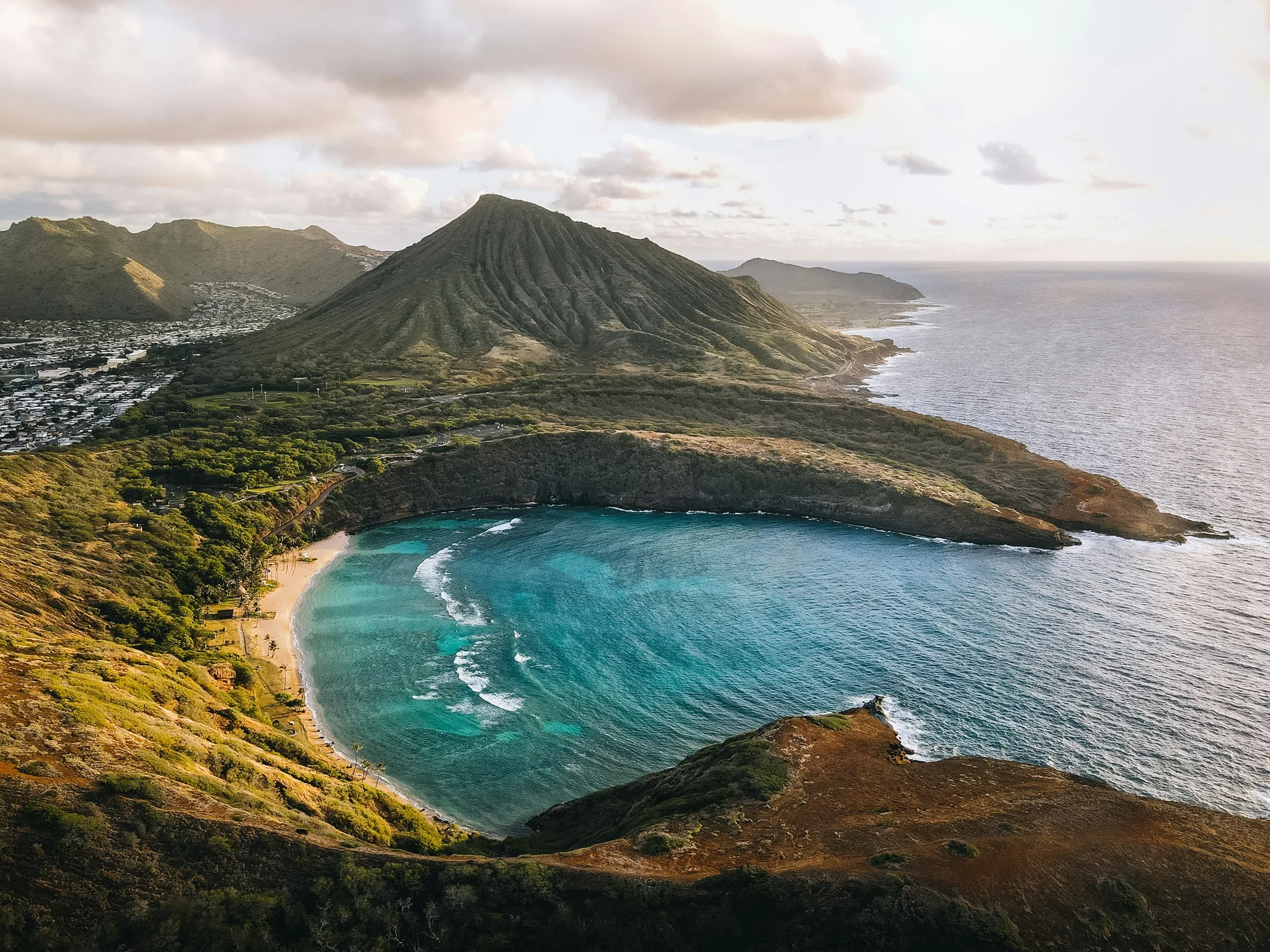


Oʻahu is wonderfully easy to overplan.
On paper, everything looks close: Waikīkī to Kailua, Honolulu to the North Shore, beach in the morning, waterfall after lunch, lūʻau at night. Then you add a toddler who wakes up at 5:10 a.m., a stroller that doesn’t like sand, a parking lot that fills earlier than expected, and a child who suddenly believes lunch is an emergency.
The better family itinerary on Oʻahu is not the one with the most pins. It is the one with a rhythm: one good outing, one real reset, and an evening that does not ask too much of anyone.
Build your days around regions instead of wish lists, and Oʻahu becomes much easier with kids. Waikīkī can be very walkable. The Windward side can feel like a different world after one mountain crossing. The North Shore is close enough to tempt you and far enough to punish a sloppy schedule.
The Oʻahu family-day rule: one anchor, one soft landing
For most families, a strong Oʻahu day has two parts.
The anchor is the thing you actually care about doing: a beach morning, a museum, a hike, a cultural site, a boat tour, a North Shore drive.
The soft landing is what happens after: pool time, a quiet lunch, a stroller walk, a nap back at the hotel, or takeout on the lanai.
The mistake is adding a second anchor after lunch. That is how a good morning turns into a backseat meltdown on H-1.
A better day might look like this:
- 6:30–8:00 a.m. Easy breakfast, sunscreen, no rushing
- 8:00–11:00 a.m. Main outing
- 11:00 a.m.–12:30 p.m. Lunch close to where you already are
- 12:30–3:00 p.m. Nap, quiet time, pool, or car rest
- 3:00–5:00 p.m. Light activity nearby
- 5:00–7:00 p.m. Early dinner and a low-key evening
This is not underachieving. This is how you leave room for the small moments kids actually remember: digging in the sand, choosing shave ice syrup, riding the hotel elevator like it is an attraction.
If you’re staying in Waikīkī or Honolulu
Waikīkī is one of the easiest places on Oʻahu to manage nap time because you can do a lot without getting back in the car. Every car seat buckle is a small negotiation.
A good Waikīkī-based morning starts early and stays simple. Walk to the beach before the heat and crowds build. Let the kids play in the sand, float, snack, repeat. If your family needs a change of scenery, Kapiʻolani Park gives you grass, shade, and room to move without turning the morning into a production. The Honolulu Zoo or Waikīkī Aquarium can fit nicely into this zone when you want structure without a long drive.
Then stop. Return to your room before everyone is visibly exhausted. Rinse off, close the curtains, and let the middle of the day be boring. If you have older kids, call it “quiet time” instead of nap time: books, tablet, cards, balcony snacks, whatever lets the day exhale.
For the afternoon, stay close. Pool time is enough. A walk for an early dinner is enough. If you want to leave Waikīkī, choose one nearby target rather than crossing the island. Ala Moana, Kakaʻako, or a museum visit in Honolulu can work well, but only if you treat it as the light second half of the day.
A Waikīkī day that works: morning beach time, zoo or aquarium if it fits, lunch near your hotel, proper room reset, then pool and early dinner. Add sunset if everyone is still cheerful. Skip it if they are not.
If you’re planning a Windward day
The Windward side — Kailua, Kāneʻohe, and the coast beyond — is one of the most rewarding day trips from Honolulu, but it deserves breathing room. The drive over the mountains is part of the experience, and traffic can change the feel of the day. Do not pair Windward Oʻahu with “maybe we’ll also go to the North Shore” unless your children are unusually tolerant of car time.
Leave after breakfast. Pick one beach or one garden-style outing, then build around it. Kailua can be a lovely family base for a few hours because you can combine beach time with lunch without zigzagging all over the coast. Kāneʻohe works well for families who want greener scenery and a slower pace.
For babies, the Windward day often works best with a car nap on the return to Honolulu. For toddlers who do not transfer well, plan to be back in your room for the real nap. For kids five and up, you can stretch the day with a snack stop or a short scenic pause, but resist adding stops just because the map looks friendly.
Windward beaches can be windy, and parking near popular beach areas can be limited. Start early and keep the plan uncluttered.
A Windward day that works: breakfast in Waikīkī, drive over in the morning, beach or garden time, simple lunch, then back across the mountains for nap or quiet time. Late afternoon pool. Dinner near where you are staying.
That is a full day, even if it only has one “activity.”
If you’re going to the North Shore with kids
The North Shore is where many Oʻahu family itineraries get too ambitious. It is not just a place to “swing by.” From Honolulu or Waikīkī, it is a real outing, and the drive can feel longer at the end of the day than it did at the beginning.
Make the North Shore your anchor for the entire day.
Start early. Choose your priorities before you leave: Haleʻiwa town and a beach stop, a mellow food-and-scenery day, or a specific family attraction in Central or North Oʻahu on the way. If you try to combine every famous beach, every food stop, every photo stop, and a late dinner back in Waikīkī, the kids will not be the only ones fading.
With little ones, the North Shore works best when the car nap is part of the plan. Bring the comfort item, time the return drive with the nap window, and accept that one parent may sit in a parked car for a few extra minutes while the other grabs coffee or snacks. That is not a failed vacation. That is expert-level family logistics.
With older kids, the North Shore can be a great longer day because there is variety: town time, beach time, roadside food, big scenery. But even then, choose a turn-back time. Returning tired at peak drive time can make the day feel heavier than it needs to.
North Shore ocean conditions vary a lot by season and day. For family swim time, choose the conditions in front of you, not the beach name on your itinerary.
A North Shore day that works: early departure, one main stop or town-and-beach pairing, lunch on that side, optional car nap on the return, then no evening plans beyond dinner close to your lodging.
If you’re staying on the West Side or Ko Olina
The West Side has a different family rhythm. If you are staying around Ko Olina, the easiest days are often resort-and-lagoon days, and that is not a compromise. Protected swimming areas, predictable food options, and short walks back to the room are exactly what many families need.
The tradeoff is distance. If your wish list is mostly Waikīkī, Diamond Head, Honolulu museums, and Windward beaches, staying west means more driving. That can still work beautifully, but not every day. Alternate outing days with stay-put days.
A strong West Side plan might be: lagoon morning, nap in the room, pool afternoon, early dinner. The next day can be your bigger Honolulu or Pearl Harbor-area outing. Then reset again. Families who enjoy Oʻahu from the West Side usually stop treating the whole island as a daily commute.
How nap strategy changes by age
Babies can be surprisingly portable on Oʻahu if you respect feeding, shade, and sleep windows. A carrier is useful for beach paths, stairs, and crowded sidewalks; a stroller is useful in Waikīkī, shopping areas, museums, and hotel zones. Many families use both.
The main planning move: do not make every nap a car nap. One per day may work. Three days in a row of improvised sleep usually catches up.
Toddlers and preschoolers do best with less. A toddler does not care that you drove across the island for a famous view if what they really wanted was a banana and the same patch of sand for 90 minutes.
Plan mornings for movement. Plan lunch before they are starving. Plan a real reset after lunch. If they skip the nap, keep the evening extremely soft.
Ages 5–10 are often ready for beach time plus museums, short hikes, food stops, and scenic drives. Give them a simple choice: beach first or aquarium first, pool before dinner or after, shave ice today or tomorrow. Not unlimited control — just enough ownership to reduce resistance.
Tweens and teens can handle longer days, but they still need downtime. Wi-Fi time in the room, a slow lunch, browsing shops, or an hour at the pool may reset them more than a formal rest period. Build in food, independence where appropriate, and a little time that is not being photographed.
The quiet power of staying regional
The best Oʻahu family itineraries are regional. They do not bounce from Waikīkī to Kailua to the North Shore to Honolulu in one heroic loop. They cluster.
If you are in town, enjoy town. If you go Windward, let that be the day. If you drive north, commit to the North Shore and stop pretending you will be back for a 4 p.m. swim in Waikīkī with everyone in a great mood.
This kind of planning may look modest before the trip. On the ground, it feels luxurious. You are not constantly packing bags, hunting parking, reapplying sunscreen in a rush, or asking tired kids to appreciate one more view.
You are giving the island enough time to feel like a place, not a checklist.
A simple five-day Oʻahu rhythm for families
Think in beats rather than fixed attractions:
Day 1: Arrival and settle-in No major plans. Get food, unpack, touch the ocean if it is easy, sleep early.
Day 2: Stay close Waikīkī, Ko Olina, or wherever you are based. Beach, pool, nap, early dinner.
Day 3: One bigger outing Windward, North Shore, Pearl Harbor-area, or another anchor that matters to your family. Keep the evening empty.
Day 4: Recovery day Slow morning, short activity, real downtime. This is often the day that saves the trip.
Day 5: Second bigger outing or favorite repeat By now you know your family’s Oʻahu pace. Choose accordingly.
The repeat is important. Children often want to return to the beach, pool, shave ice place, or banyan tree they already know. Adults chase novelty; kids build attachment. Leave room for that.
The best itinerary is the one your family can actually enjoy
Oʻahu can give a family a city morning, a beach afternoon, mountain views, warm water, good food, and a soft place to land at night. But it gives those things most generously when you stop trying to collect them all at once.
Plan one real thing each day. Protect the nap or quiet window. Eat earlier than you would at home. Keep one evening completely unclaimed. Let the pool count. Let the beach count. Let a half-day be enough.
That is not lowering your expectations for Hawaiʻi with kids. That is understanding the assignment.

Further Reading
A few relevant next steps from Alakai Aloha.
 BlogWhat to Pack for an Oʻahu Family Trip
Pack smarter for Oʻahu with family essentials by age, from beach days and museum stops to Waikīkī walks, Ko Olina downtime, and North Shore drives.
Editor's pick GuideBest Hotels & Resorts on Oʻahu: Where to Stay
A guide to best hotels Oʻahu.
Editor's pick BlogFlying to Oʻahu With Kids Without the Stress
A practical guide to arriving at HNL with kids, from baggage claim and car seats to rental cars, rideshares, hotel transfers, and first-day pacing.
Editor's pick BlogA Low-Stress Guide to Oʻahu With Teens
Plan an Oʻahu trip teens will actually enjoy, with beach time, food stops, shopping, surf lessons, city exploring, and smart ways to avoid stress.
Editor's pick