

Every winter, Oʻahu’s ocean changes in a way you can feel before you can prove it. A crowd lingers at a lookout. Someone points past the reef line. A white puff appears on the horizon, hangs for a second, then disappears. A few minutes later, a dark back rolls through the water, followed by the clean lift of a tail.
Koholā, humpback whales, come to Hawaiʻi to breed, give birth, and nurse their calves in warm winter waters. Oʻahu is not always marketed as the whale-watching island, but that can work in your favor. You can look from a morning walk near Waikīkī, a windy cliff on the southeast coast, a leeward boat out of Waiʻanae or Ko Olina, or a quiet scan from Kaʻena Point. The trick is knowing where Oʻahu gives you height, open water, and patience.
When to see humpback whales on Oʻahu
Oʻahu’s humpback season generally runs through winter into spring. Sightings can begin around late fall and continue into April or May, but the most reliable window is usually January through March.
If whales are high on your trip wish list, aim for that peak stretch. December can be lovely, but sightings are less predictable. April can still bring action, especially mothers and calves, though the season is beginning to taper.
Time of day matters less than people think, but mornings often have two advantages: lighter winds and cleaner water texture. A calm ocean makes it easier to spot blows, backs, and splashes. Late afternoon can also be beautiful, especially from the west side, though glare can make scanning harder.
The best mindset is not “book one hour and demand a whale.” It is more like birding or stargazing: choose a good place, slow down, scan well, and let the island do what it does.
What you’re looking for
A whale sighting from shore often starts small. Look for a blow first: a vertical white puff above the ocean surface, like a tiny burst of steam. Once you see one, keep your eyes in that same area. Humpbacks usually breathe several times before diving.
Other signs are easier to recognize:
A dark, rounded back moving through the water A tail fluke lifting before a deeper dive Long white pectoral fins flashing below the surface A sudden splash from a tail slap or pec slap A full breach, when the whale launches out of the water and lands in a burst of whitewater
Binoculars help a lot on Oʻahu because many of the best viewpoints are high and wide. You do not need fancy equipment. Even a compact pair can turn a vague splash into a clear tail, calf, or traveling group.
Best shore-based whale spots on Oʻahu
Oʻahu rewards whale watchers who choose edges: points, lookouts, ridgelines, and open coastlines where you can see beyond the nearshore reef.
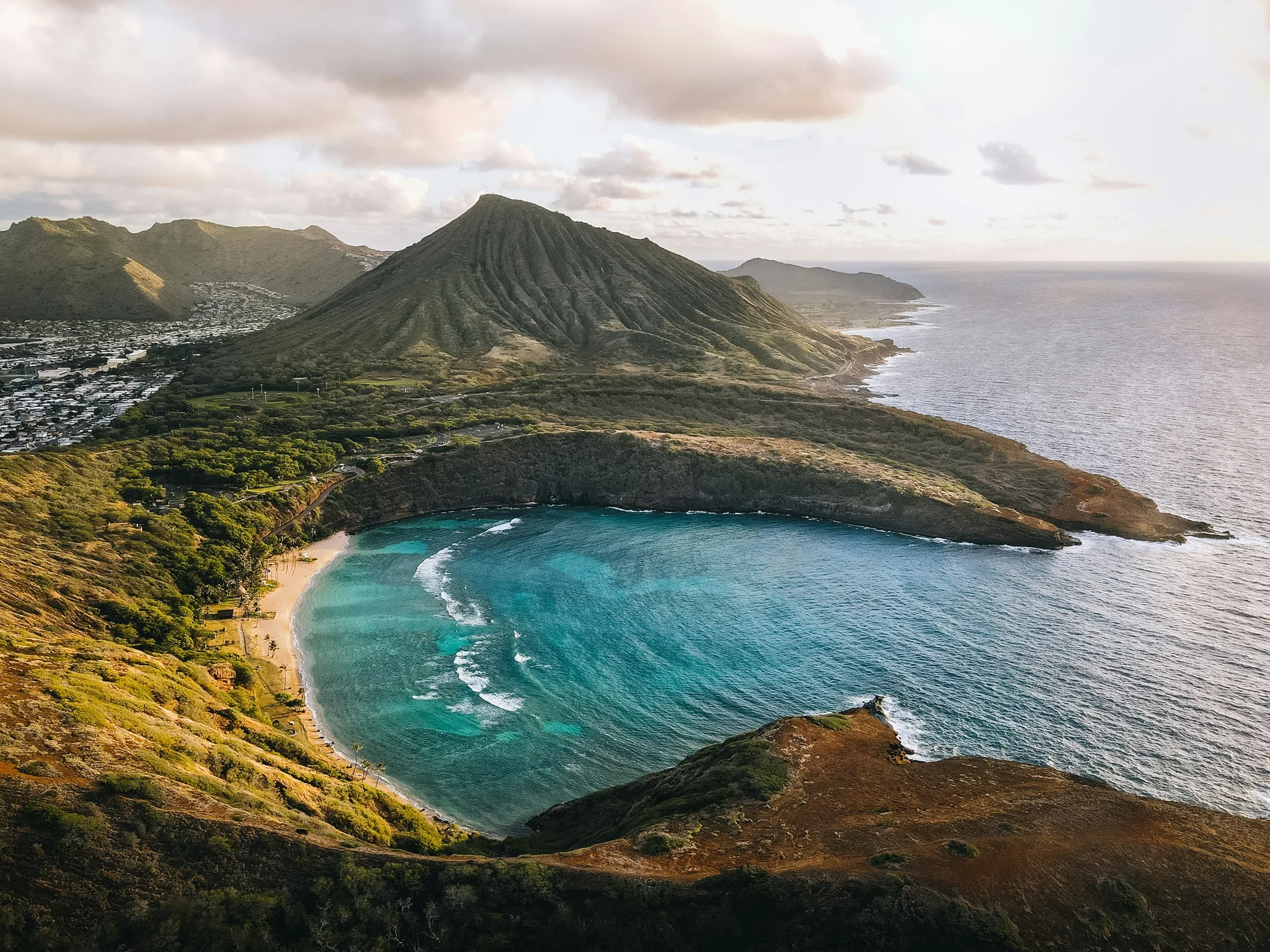
Makapuʻu Lighthouse Trail and the southeast coast
For many visitors, Makapuʻu Lighthouse Trail is the easiest strong recommendation. It has elevation, open views, and a coastline that feels built for winter whale scanning. The paved uphill walk gives you changing angles over the Kaiwi Channel, with wide places to pause along the way.
This is a good choice if you want to combine whale watching with a morning outing rather than plan your whole day around it. Start early, bring water, and take your time on the way up. Watch the water between breaths of wind. The whales are often farther out than your eye expects.
Nearby roadside viewpoints along the southeast coast, including the Halona Blowhole area and Lānaʻi Lookout, can also be productive in season. Treat them as quick scan stops: park safely, stay in the designated lookout areas, and give the ocean a few minutes before moving on.
Diamond Head and the coast near Waikīkī
If you’re staying in Waikīkī, you do not have to go far to start looking. The coastal areas around Diamond Head offer better whale-watching angles than Waikīkī Beach itself because you gain some height and a wider view of open water.
This is not the most dramatic whale perch on the island, but it is one of the most practical. If your day is built around Waikīkī, a morning walk or short drive toward Diamond Head can give you a real chance during peak season. Bring binoculars if you have them; without elevation, distant blows are easy to miss.
Waikīkī boat traffic, surf, swimmers, and city energy can make whale watching feel less serene here than on the outer coasts. Still, that contrast is part of Oʻahu: you can be holding coffee in town and watching one of the Pacific’s great migrations at the same time.
Kaʻena Point
Kaʻena Point, the wild western tip of Oʻahu, is one of the island’s most memorable places to watch the ocean. It faces open water with a feeling of distance from the city, and winter is a compelling time to walk, pause, and scan.
There are two main approaches, from the west side beyond Waiʻanae/Mākaha or from the north shore beyond Mokulēʻia. Both are exposed and feel more remote than the distance on a map suggests. This is not a casual flip-flop stop. Bring sun protection and water, and plan for a walk rather than a quick roadside view.
For whale watching, the reward is space: long horizons, fewer distractions, and the possibility of seeing blows and splashes along a coastline that still feels raw.
Waiʻanae, Mākaha, and the leeward coast
Oʻahu’s leeward side often has a different ocean mood than the windward side. Around Waiʻanae, Mākaha, and the coastline near Ko Olina, whale watching can be excellent from both shore and boat during the heart of the season.
From shore, look for places where you have a clean view past the reef and along the coast. The west side is also a natural base for boat-based whale watching, with tours commonly operating from leeward harbors and resort areas. If you’re staying at Ko Olina, this is likely your most convenient whale-watching zone.
The leeward coast is especially appealing in late afternoon, when the light softens and the Waiʻanae Mountains hold the evening behind you.
North Shore winter viewing
The North Shore is famous in winter for surf, and that same season is also whale season. You may spot koholā beyond the surf line from beaches and coastal points between Haleʻiwa, Waimea, Pūpūkea, Sunset, and toward Kahuku.
The tradeoff is ocean energy. On big surf days, the sea is full of whitewater, spray, and movement, which can make distant whale activity harder to separate from the background. On calmer winter days, the North Shore can be a beautiful place to scan between beach stops.
If whale watching is your main goal, Makapuʻu or the leeward side may be more straightforward. If you’re already spending the day up north, bring binoculars and look beyond the breaking waves.
Boat-based whale watching on Oʻahu
A boat tour gives you a different experience: lower to the water, closer to the whale’s world, and often guided by captains who know where activity has been happening that week. It also removes some of the guesswork for visitors who do not want to spend vacation scanning from cliffs.
On Oʻahu, whale-watch cruises commonly depart from three general areas: Honolulu and Waikīkī-side harbors, Ko Olina and the Waiʻanae coast, and, when winter conditions allow, parts of the North Shore.
When choosing a tour, look less at promises and more at judgment. A good operator will explain that whales are wild animals, follow federal viewing rules, avoid crowding, and let the encounter unfold without chasing. Naturalist commentary, hydrophones, and smaller-group formats can add depth, but the most important thing is a crew that behaves calmly around wildlife.
If you get seasick, choose your departure area and vessel type carefully. Winter seas can be bumpy, especially outside protected waters. Morning trips are often smoother, though not guaranteed.
Viewing rules, briefly
Humpback whales in Hawaiʻi are protected. Boats, paddlers, swimmers, and drones are not allowed to approach them closely or disturb their behavior. The commonly cited viewing distance for vessels and people in the water is at least 100 yards from humpback whales in Hawaiʻi, and aircraft, including drones, have their own distance restrictions.
The practical version is simple: do not chase, cut off, surround, or follow whales. Do not get in the water to swim with humpbacks. From shore, you have the easiest job: watch, enjoy, and give the whales their ocean.
A good Oʻahu whale day
If you’re staying in Waikīkī, start with an early drive or rideshare to Makapuʻu Lighthouse Trail. Walk slowly, scan often, and linger at the viewpoints. Afterward, continue along the southeast coast with short stops at the lookouts if parking is reasonable. You can be back in town for lunch without feeling rushed.
If you’re staying at Ko Olina, consider pairing a leeward boat tour with a late-day shore scan. This keeps your logistics easy and gives you two different styles of whale watching.
If you’re an ocean-and-walking person, save Kaʻena Point for a day when you want space and friendly weather. It is less about guaranteed sightings and more about being in the right kind of place for winter on Oʻahu.
A final word on koholā
Part of the pleasure of whale watching on Oʻahu is that it asks you to look past the obvious island. Beyond the hotels, traffic, surf lessons, shopping streets, and famous beaches, there is a seasonal rhythm moving offshore. Koholā arrive after a long migration, mothers nurse calves in warm water, males sing below the surface, and for a few months the horizon feels alive.
You may get the big breach. You may get a tail at the edge of your binoculars. You may only see a single blow and spend the rest of the morning wondering if anyone else caught it. All of those count. Whale watching here is not a performance on demand; it is a winter habit of attention. On Oʻahu, that attention is often rewarded.

Further Reading
A few relevant next steps from Alakai Aloha.
 BlogHow to See Spinner Dolphins Responsibly on Oʻahu
Plan a respectful Oʻahu dolphin outing with tips on where spinner dolphins may appear, why distance matters, and how to keep naiʻa wild.
Editor's pick ActivityLānaʻi Lookout
Discover Lānaʻi Lookout on Oʻahu's southeastern coast, offering dramatic panoramic ocean views, volcanic rock formations, seasonal whale watching, and stunning photography opportunities, especially at sunrise or sunset.
Editor's pick ToolCompare island weather by region
See how rain, wind, and conditions vary around the island before you choose your day plan.
Useful planning tool ActivityWaikīkī Beach
Waikīkī Beach offers a quintessential Hawaiian experience with warm, generally calm waters perfect for swimming, learning to surf, and enjoying a vibrant urban backdrop against Diamond Head.
Editor's pick